More than half of small business leaders believe a future disaster or disruption is likely, yet many have not taken the basic steps needed to prepare, according to preliminary findings from new research commissioned by the U.S. Chamber of Commerce Foundation with support from Verizon.
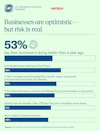
Optimism
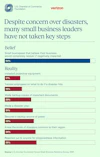
Gap
Experience
are confident they would completely recover if their business were hit by a disaster or major disruption
say their business is prepared compared to similar-sized businesses in their industry
have a disaster plan and 20% have a disaster budget
say their business has already been negatively affected by a natural disaster or significant business disruption
of those affected say the impact was bad, and it took most of them a quarter or longer to resume operations
Why Small Business Resilience Matters
Small businesses fuel the U.S. economy by employing 45.9% of the nation’s workforce and generating 43.5% of its gross domestic product.
Because small businesses play such an outsized role at the community level, disruptions to their operations can have consequences that extend far beyond any one company.
These findings underscore why small business preparedness deserves closer attention.
Small Businesses See the Risks. Many Aren’t Ready
Small business leaders are optimistic about where their business stands today, but at the same time, concern about disruption is prominent across varied types of hazards.
Even with widespread concern about disasters and disruption, many small business leaders have not yet taken key preparedness actions or sought out resilience information. For many small business leaders, the day-to-day realities of running a business can make preparedness steps hard to act on.
Recovery Takes Longer Than Many Small Businesses Can Afford
Among the 45% of small business leaders who said their company has already been negatively affected by a disaster or major disruption, 53% said it took more than three months to resume normal operations.
Yet about one-third say they could continue paying employees for only weeks, not months, during a temporary closure. Together, these findings suggest that many small businesses may be financially strained long before recovery is complete.
Preparedness Is Good for Business — and for Communities
Small business leaders recognize that preparedness can benefit both their business and the broader community. Despite gaps between risk awareness and resilience steps taken, many small business leaders believe that preparedness can have beneficial ripple effects.
- 71% would be willing to share resources, such as space, equipment, or staff, with other local businesses following a major disruption.
- 69% say being better prepared for a major disruption would give their company a competitive advantage
- 54% acknowledge that businesses like theirs are critical for the local community's recovery if a major disruption strikes
Closing the Preparedness Gap
These early national findings point to a clear challenge: small businesses are confident in their ability to bounce back, but many are underprepared for the disruptions they say are likely to affect them, and the broader communities and networks they support.
The upcoming full research analysis will create more understanding about the gaps that exist between optimism, risk, and ability to recover for small businesses and the communities that depend on them.
This overview is part of a broader research and analysis project by the U.S. Chamber of Commerce Foundation and Verizon. The full report will be available soon.
Presented by:


Get small business tips and program news delivered to your inbox with our monthly newsletter, The Connector.