Building Resilience Conference
At the forefront of global resilience, our conference is the longest running of its kind, designed to inspire and spark innovation and cross-sector collaboration.

The U.S. Chamber of Commerce Foundation’s Building Resilience is a national convening focused on disaster preparedness, response, and community resilience.
Attendees, speakers, and sponsors come together with a shared commitment to strengthening our nation’s ability to navigate crises and meet the urgent challenges posed by disasters.
Sample topics include anticipating future risks, improving efficiency, strengthening cross-sector collaboration, managing costs related to preparedness and recovery, measuring impact, and more.
2026 Highlights

Explore key takeaways from the 2026 Building Resilience conference.

Presented in partnership with Verizon, new research unveiled at Building Resilience 2026 explores the disconnect between small business optimism and preparedness—and why closing that gap matters for entire communities.
- Designing a Resilient Operating System: Lowering Costs, Mitigating Risks, and Creating OpportunityExploring how designing a more resilient operating system can help organizations lower costs, mitigate risks, and create opportunity before disruptions hit.Designing a Resilient Operating System: Lowering Costs, Mitigating Risks, and Creating Opportunity
- Powering Small Business Success Through ResilienceHelping small businesses access tools and resources to prepare for, respond to, and recover from natural disasters.Powering Small Business Success Through Resilience
- AI as Critical Infrastructure: The Next American LifelineExploring why artificial intelligence is increasingly viewed as critical infrastructure for when disruptions and disasters strike.AI as Critical Infrastructure: The Next American Lifeline


2025 Highlights

With another hurricane season approaching and billion-dollar disasters increasing nationwide, the 2025 Building Resilience Conference brought together leaders to explore stronger unified approaches to disaster resilience and management.
- Small Business Resilience: Success, Opportunities, and ChallengesEnsuring small business resilience is not just about protecting individual businesses but safeguarding our economy.Small Business Resilience: Success, Opportunities, and Challenges
- Civic Engagement: The Backbone of Community ResilienceFostering a sense of responsibility and collaboration toward common challenges is critical to disaster preparedness, response, and recovery efforts.Civic Engagement: The Backbone of Community Resilience
- Mitigation for Every CommunityInvestments in resilience can reduce the impact of disasters as well as drive significant economic savings and enhance public safety.Mitigation for Every Community


2024 Highlights

Small business perspectives were the focus of the 13th Annual Building Resilience Conference, highlighting the power, tenacity, and resilience of small businesses across the country.
Learn More
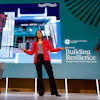
Trust took center stage at this year’s 13th Annual Building Resilience Conference, where public and private sector leaders convened to discuss actionable strategies, key insights, and lessons learned for supporting communities before, during, and after crises.
Learn More
Program Spotlight

The Readiness for Resiliency Program (R4R) helps small businesses prepare for disasters and offers immediate $5,000 grants to help them recover after a disaster occurs.
More Insights


Explore Past Building Resilience Conferences
Our Experts


Stay Connected
Interested in receiving future Building Resilience invites and updates?
Latest Content
- On July 26-27, the U.S. Chamber of Commerce Foundation hosted the 12th Annual Building Resilience Conference. The conference brought together prominent business leaders, government officials, and industry experts to share knowledge and best practices through action-oriented panels, fireside chats, and keynote speeches.As traditional risks and geopolitical threats intertwine in novel and complex ways, collaboration among the public, private, and non-profit sectors has become more critical than ever. Only by working together can these groups most effectively mitigate risk while navigating an ever-changing global landscape.As the world grows more intricate, communities and companies face many threats, hazards, and risks that demand careful consideration and cross-sector collaboration. During the U.S. Chamber Foundation's 12th Annual Building Resilience Conference, panelists explored the power of collaboration, embracing a unified vision, and pooling resources across sectors to navigate the complexities ahead.In 2023 alone, the United States has already seen 12 separate billion-dollar weather and climate disasters. Disasters of all types, both novel and familiar, only continue to increase in frequency and intensity. Yet, many of the current systems in our communities are not equipped to handle these rising crises.As disasters become more and more commonplace across the United States, strong cybersecurity is critical to keeping response systems operating smoothly. Organizations are particularly susceptible to cyber attacks during natural disasters, which could limit their ability to support the communities they aim to serve.
