Workforce

Talent is one of our country’s most important assets—yet our current methods for discovering and cultivating talent are outdated—built for another time and a different economy. For America to grow and prosper, we need new systems fit for our modern economy.

Our shared economic success as a nation will depend on our ability to source, develop, and deploy our workforce successfully, but for too many the labor market is broken, inaccessible, or non-existent.— Jason Tyszko, U.S. Chamber Foundation Senior Vice President

Employer-led career pathways connecting K-12 education and workforce needs through industry-designed learning experiences, high-quality work-based learning, and credentials of value.
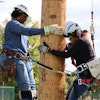
Across our nation’s talent pipeline, we explore the stories of employers investing in the workforce of today and tomorrow to close the skills gap.
Read More
Our workforce data systems are stuck in the past. In response, we released The New Data Paradigm—a forward-looking framework to modernize how America’s education and job data are collected and used.
Programs
The challenge of our time is creating a workforce system that develops the talent needed for the jobs of today and tomorrow. At the U.S. Chamber Foundation, we address this challenge through our commitment to promoting innovative workforce development solutions. We achieve this by building employer-led, agile workforce development systems and programs.






Latest Content
- In 2018, the Kentucky Chamber Workforce Center launched a statewide initiative seeking to build high-quality talent pipelines that foster economic growth.The U.S. Chamber of Commerce Foundation (Chamber Foundation) and the T3 Innovation Network (T3 Network) recently partnered with the HR Open Standards Consortium (HR Open) to develop public-private open data standards for employment and earnings records.In 2019, a coalition of businesses, key state leaders, legislators, research and children advocacy groups was formed with the purpose of tackling child care accessibility, affordability, and quality.Several years ago, Coffeyville Public Schools recognized a noticeable gap in quality early education within the district. They understood the need to engage community leaders to improve education and childcare access.Expanding childcare access for more people in Iowa. In 2015, Black Hawk County saw a 40 percent decline in childcare centers and programs. This decline prompted an urgent need to fill the childcare access gap within the community.